


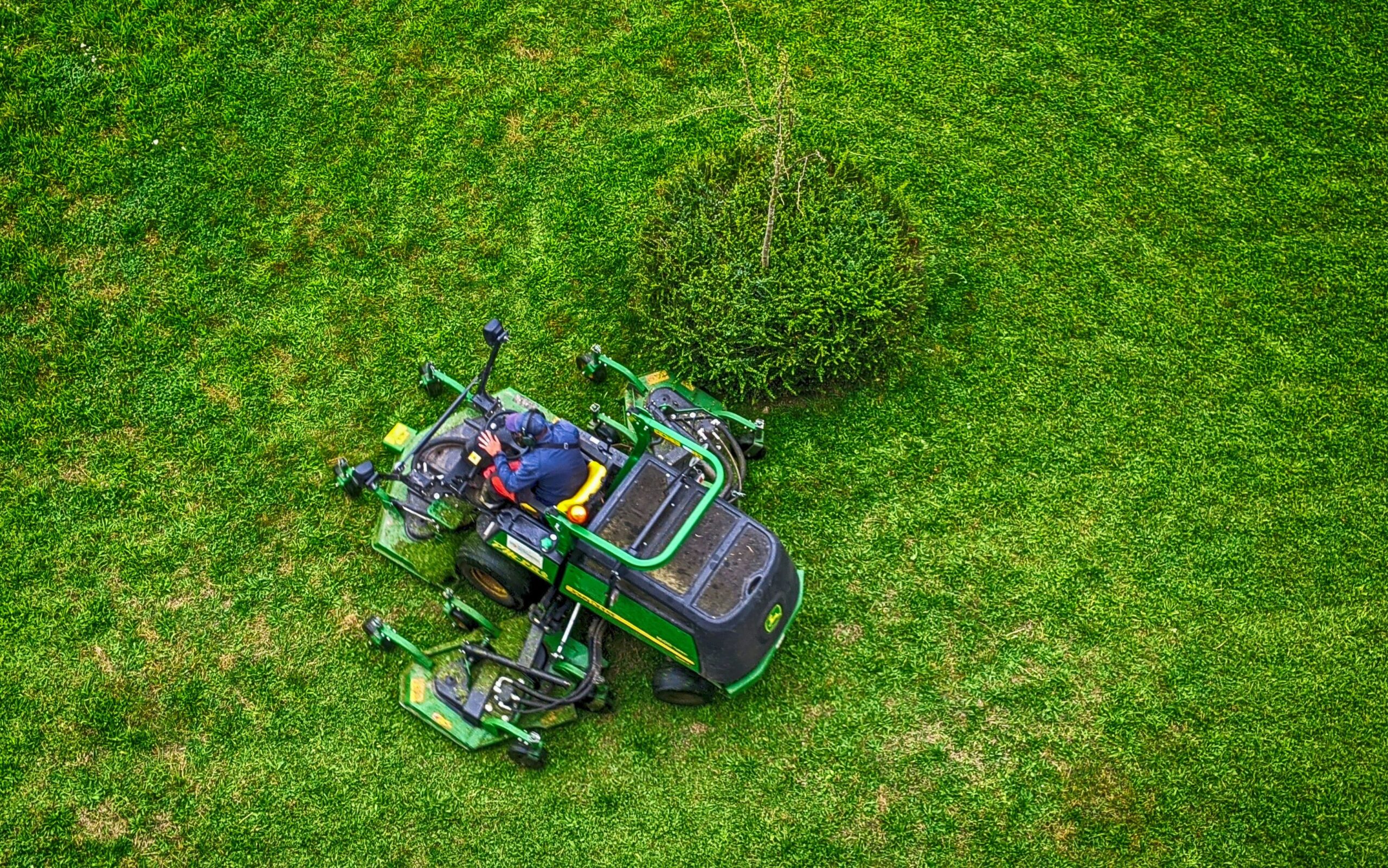
Maintaining a sprawling green landscape often feels like a full-time job that consumes your entire weekend and leaves you physically exhausted. For many homeowners with large properties, the traditional gas-powered riding mower has been the only viable solution for decades.
However, the rise of autonomous technology has finally brought the convenience of indoor robot vacuums to the vast outdoors. Modern robotic mowers can now handle multiple acres of grass with surgical precision and zero human intervention.
These machines use advanced satellite navigation and artificial intelligence to map your yard and avoid obstacles like trees or flower beds. By cutting just a tiny fraction of the grass every single day, they maintain a “carpet-like” finish that is impossible to achieve with weekly manual mowing.
You no longer have to worry about loud engines, oily fuel cans, or the sweltering summer heat while trying to keep your lawn looking pristine.
Embracing a robotic mowing ecosystem ensures that your property remains the envy of the neighborhood while you reclaim your precious free time. This comprehensive guide explores the most effective autonomous solutions currently redefining the boundaries of large-scale residential and commercial lawn care.
Mastering the Power of GPS Boundary Technology

A. Analyzing Virtual Perimeter Systems
The most significant advancement in large-lawn mowing is the move away from physical perimeter wires to virtual GPS boundaries. Traditional robot mowers required you to bury a wire around your entire property, which is a nightmare for anyone owning more than half an acre.
Modern high-end mowers use Real-Time Kinematic (RTK) GPS to create a digital map of your yard with centimeter-level accuracy.
You simply drive the mower around the edge of your lawn once using a smartphone app to set the boundaries forever. This technology allows the mower to know exactly where it is and where it needs to go without any physical constraints.
From my perspective, the transition to wire-free setups solves the biggest “point of failure” in robotic mowing—the broken boundary wire. You solve the problem of accidental wire cuts during gardening or aerating by moving the entire map into the cloud.
I suggest you choose a model with a high-gain antenna if your property has many tall trees that might block satellite signals. This ensures that your mower maintains a rock-solid connection and never wanders into your neighbor’s prized rose bushes.
B. Evaluating Systematic Cutting Patterns
Unlike smaller robot mowers that bounce around randomly, large-lawn models use systematic “striping” patterns to maximize efficiency. These machines plan the most logical path across your acreage, moving in straight, parallel lines just like a professional landscaper would.
This method allows the mower to cover significantly more ground in less time, which is essential for properties exceeding one or two acres.
Systematic mowing also reduces the “wear and tear” on your grass because the mower isn’t constantly turning and scrubbing the turf. It creates that classic, high-end look that makes your lawn look like a professional sports field every single day.
I believe that the “visual impact” of a systematic cut is what truly justifies the higher price tag of professional-grade robots. You solve the problem of “shaggy spots” by ensuring the mower reaches every square inch of your property on a predictable schedule.
My advice is to rotate the direction of the stripes every week through the app settings to prevent soil compaction. This simple digital adjustment keeps your grass standing tall and healthy while preventing deep ruts from forming in the soil.
C. Determining the Slope and Terrain Capacity
Large lawns are rarely perfectly flat, and many autonomous mowers now feature heavy-duty all-wheel-drive (AWD) systems to tackle steep hills. Some specialized models can climb slopes of up to seventy percent, which is far beyond what any human could safely manage with a push mower.
These mowers use low centers of gravity and aggressive tire treads to maintain grip on wet or slippery grass without sliding.
The internal AI constantly monitors the tilt sensors and adjusts the motor torque to keep the machine moving steadily uphill. This capability turns dangerous, hard-to-reach embankments into perfectly manicured parts of your landscape.
In my view, the “safety factor” on hills is the strongest argument for switching to a robot if your property has difficult terrain. You solve the problem of dangerous manual mowing on inclines by letting a machine with a low center of gravity take the risk for you.
I suggest you walk your property and identify any “drop-offs” or holes that might trap a mower before you start your first run. Smoothing out these small terrain gaps ensures that your robot remains autonomous and never requires you to rescue it from a ditch.
D. The Durability of Weatherproof Components
Robotic mowers for large lawns stay outside for months at a time, meaning they must withstand intense sun, heavy rain, and blowing dust. High-quality models feature IP-rated sealed housings that protect the sensitive lithium batteries and brushless motors from the elements.
Most units include built-in rain sensors that tell the mower to return to its charging station when the weather turns bad.
This prevents the mower from tearing up wet turf or getting “clogged” with heavy, damp grass clippings. A ruggedized robot is a long-term investment that should provide reliable service for many years with only minimal maintenance.
I think that “weather intelligence” is what separates a high-end tool from a fragile toy in the outdoor power equipment market. You solve the problem of “turf damage” by trusting the sensors to decide when it is safe to cut and when it is time to hide.
My take is that you should still provide a small “garage” or cover for the charging station to protect the plastics from UV degradation. This extra layer of protection keeps your mower looking and performing like new for several additional seasons.
Optimizing Battery Life and Charging Efficiency
A. Harnessing High Capacity Lithium Ion Cells
Large-lawn mowers require massive battery packs to sustain the several hours of runtime needed to cover expansive areas. Most manufacturers use high-grade lithium-ion cells that can handle hundreds of “deep discharge” cycles without losing significant capacity.
These batteries are designed to provide consistent power levels even when they are nearly empty, ensuring the cut quality doesn’t drop at the end of a shift.
The mower’s internal computer manages the discharge rate to prevent overheating, which is the primary enemy of battery longevity. Investing in a mower with a large battery ensures that it spends more time cutting and less time sitting at the charger.
From my perspective, “battery density” is the secret metric that determines how “autonomous” your mower actually feels. You solve the problem of “incomplete jobs” by choosing a battery size that allows the mower to finish at least half of your lawn on a single charge.
I suggest you avoid “fast-charging” modes unless you are in a rush, as slower charging cycles generally preserve the battery’s chemical health for longer. This disciplined approach ensures that your expensive power pack remains vibrant and strong for many years of heavy use.
B. Utilizing Smart Return to Base Logic
When a robotic mower detects that its battery is getting low, it uses its internal map to find the shortest path back to the charging station. Some models follow the boundary wire, while more advanced GPS units simply drive a straight line across the grass to save time.
This “smart return” logic prevents the mower from getting stranded in a remote corner of your multi-acre property with a dead battery.
The mower will automatically dock itself, recharge to the required level, and then resume the job exactly where it left off. This seamless loop allows the machine to work twenty-four hours a day until the entire project is complete.
I believe that “return efficiency” is a major factor in the total productivity of your autonomous lawn care system. You solve the problem of “power-drain transit” by letting the GPS calculate a route that avoids thick grass on the way home.
My advice is to place your charging station in a central location on your property rather than in a far corner. This reduces the “commute time” for your mower, allowing it to spend more of its energy on actual grass cutting and less on traveling.
C. Implementing Solar Assisted Charging Hubs
For properties where running a power line to the middle of the field is difficult, solar-assisted charging stations offer a brilliant solution. You can set up a small solar array and a battery buffer to provide the energy your mower needs to stay charged off the grid.
This makes the robotic mower a truly “zero-emission” and “zero-cost” tool after the initial investment is paid. Solar charging hubs are perfect for large estates, orchards, or commercial sites where traditional infrastructure is limited. It allows you to maintain the most remote parts of your land without ever needing an extension cord.
In my view, the “off-grid mower” is the ultimate dream for anyone moving toward a fully sustainable and independent lifestyle. You solve the problem of “trenching wires” across your beautiful landscape by using the sun’s free energy to power your maintenance.
I suggest you double the size of your solar panel array to ensure the mower can still charge during consecutive cloudy days. This “over-provisioning” of energy provides the reliability you need to keep your lawn in top shape regardless of the weather.
D. Managing Thermal Limits During Summer Heat
Lithium batteries and electric motors generate heat, and high summer temperatures can push these components toward their safety limits. Smart robotic mowers include thermal sensors that will pause the mowing or slow down the charging process if the internal temperature gets too high.
This “thermal protection” prevents permanent damage to the battery cells and ensures the electronics don’t burn out during a heatwave.
You should look for mowers with “active cooling” fans or large heat sinks if you live in a region with consistent triple-digit temperatures. This ensures your mower can keep working safely while you stay cool inside your air-conditioned home.
I think that “heat management” is the most overlooked specification when people are comparing different autonomous mower brands. You solve the problem of “summer downtime” by choosing a machine designed for your specific climate’s thermal challenges.
My take is that you should schedule your mower to work during the cooler morning and evening hours during the peak of summer. This protects the hardware and prevents the mower from stressing the grass during the hottest part of the day when it is most vulnerable.
Advanced AI Features and Obstacle Avoidance
A. Leveraging Computer Vision for Object Recognition
The latest generation of robotic mowers uses high-resolution cameras and AI to “see” and identify objects in their path. Unlike older models that had to bump into something to know it was there, these “vision-enabled” mowers can spot a dog, a toy, or a fallen branch from several feet away.
The AI categorizes the object and decides whether to drive around it or wait for it to move. This technology significantly increases site safety and prevents the mower from “munching” on items left on the lawn. It provides a level of intelligence that makes the mower feel more like a living helper than a simple machine.
From my perspective, “active vision” is the final bridge that makes robot mowers safe for families with active kids and pets. You solve the problem of “lawn carnage” by letting the AI recognize the difference between a dandelion and a child’s shoe.
I suggest you keep the camera lenses clean with a soft microfiber cloth once a week to ensure the AI has a clear view. A clean “eye” leads to a much smarter mower that can navigate even the most cluttered and busy family yards.
B. Implementing Ultrasonic Sensors for Proximity
Ultrasonic sensors act like a “sonar” system, sending out sound waves to detect obstacles that might be invisible to a camera, such as a wire fence or a dark object at night. These sensors allow the mower to slow down as it approaches a solid object, preventing hard impacts that could damage the mower’s chassis.
The combination of cameras and ultrasound provides a “multi-layered” safety shield that works in all lighting and weather conditions.
This redundancy is critical for large, complex lawns where the mower might encounter a wide variety of static and moving hazards. It ensures that your autonomous mower remains a quiet and gentle part of your outdoor environment.
I believe that “redundant sensing” is the only way to achieve true 100% autonomy without any human supervision required. You solve the problem of “sensor blindness” by using different technologies that back each other up in difficult conditions.
My advice is to check the sensor ports for spider webs or dirt every time you change the mower’s blades. Keeping these “ears” clear ensures that the mower can always hear the environment around it and react with perfect timing.
C. Optimizing Edge Cutting and Trimming Logic
Large lawns often have complex edges, including stone walls, flower beds, and winding paths that are difficult for a large machine to navigate. Smart mowers use specialized “edge-cut” modes where they follow the boundary closely with their blades offset to one side.
This minimizes the amount of manual string trimming you have to do at the end of the week. Some models even feature “swing-out” blades or secondary trimmers that can reach into tight corners and around fence posts.
This attention to detail ensures that the entire lawn looks “finished” without you ever needing to pick up a manual tool.
In my view, “edge performance” is the true test of a high-quality robotic mower’s mapping and navigation software. You solve the problem of “the shaggy perimeter” by adjusting the “overlap” settings in your app to ensure the mower gets as close as possible to obstacles.
I suggest you install “mower-friendly” edging, like flat pavers, around your garden beds to give the robot a safe surface to drive on. This small landscaping adjustment allows the mower to “over-cut” the edge, eliminating the need for a string trimmer entirely.
D. Utilizing Smart App Connectivity and Voice Control
Modern robotic mowers link to your home Wi-Fi or use built-in cellular data to stay connected to your smartphone at all times. You can start, stop, or reschedule a mow from anywhere in the world, giving you total control over your property.
Many units also integrate with voice assistants like Alexa or Google Home, allowing you to say “Mow the lawn” while you are busy in the kitchen.
The app also provides “theft protection” via GPS tracking, sending an alert to your phone if the mower is moved outside its “home zone.” This digital ecosystem turns your lawn care into a managed service that fits perfectly into your modern smart home.
I think that “remote connectivity” is the most fun and rewarding part of owning a piece of high-tech outdoor machinery. You solve the problem of “unexpected guests” by quickly sending the mower back to its base with a single tap on your screen.
My take is that you should set up “forbidden zones” in the app during the spring when you have new flowers blooming or ground-nesting birds. This flexible digital control allows you to protect your yard’s biodiversity while still keeping the grass perfectly maintained.
Conclusion

Robotic mowers are truly the best tool for anyone with a large lawn. They provide a high level of finish and save you hours of work.
Using autonomous technology allows you to reclaim your weekends for family and fun. These machines pay for themselves through saved time and lower fuel costs.
Always remember that the “mapping” is the most important part of the setup. You should spend extra time getting the boundaries perfect for the best results.
Building a beautiful and sustainable yard starts with the right autonomous tools. These mowers are quiet, clean, and incredibly efficient for any large property.
Don’t be afraid of the initial price tag for a professional-grade unit. A high-quality robot will last for years and provide incredible value over time.
Start your journey to a stress-free lawn by choosing a robotic mower today. You will be amazed at the “carpet-like” finish it provides your grass.
Your freedom from the lawn mower starts with a single tap on your phone. Build a better and more modern outdoor life with autonomous mowing.