


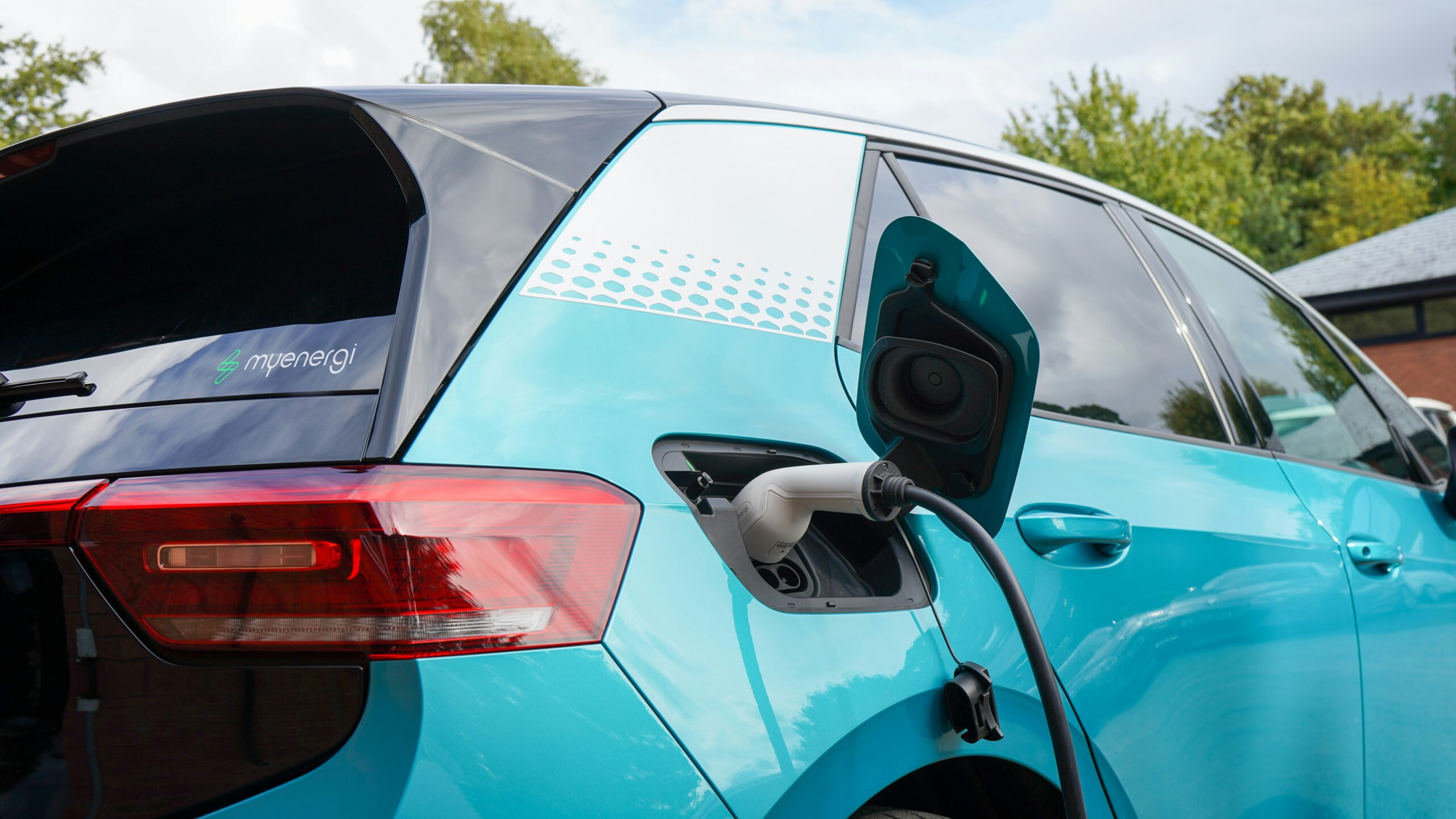
The automotive industry is currently witnessing a massive shift as electric vehicles (EVs) move from being a niche luxury to the global standard for transportation. We no longer live in an era where a simple mechanical wrench and a basic code reader can solve every problem under the hood of a modern car.
Today’s electric vehicles are essentially high-performance computers on wheels, requiring a completely different set of skills and tools for proper maintenance and repair.
Traditional internal combustion engine diagnostics focus on fuel ratios and exhaust sensors, but EV diagnostics dive deep into high-voltage battery chemistry and complex thermal management systems.
Fortunately, the integration of Artificial Intelligence into diagnostic scanners has made it possible for independent mechanics and tech-savvy owners to manage these high-tech machines with absolute precision.
These smart scanners use machine learning to predict potential component failures before they even happen, saving users from expensive roadside breakdowns and permanent battery damage.
By accessing the intricate data layers of an electric drivetrain, AI tools provide a level of insight that was previously only available at authorized dealership service centers.
This technological leap ensures that your vehicle remains efficient while significantly extending the operational life of its most expensive component—the battery pack.
This comprehensive guide explores the most effective AI-driven diagnostic solutions currently redefining the boundaries of electric vehicle maintenance and digital troubleshooting.
Mastering High Voltage Battery Health Analytics

A. Analyzing State of Health and Capacity Fade
The battery pack represents the heart and the most expensive part of any electric vehicle, making its health the top priority for any diagnostic check. AI diagnostic scanners can read the individual cell voltages and temperatures to calculate the “State of Health” (SOH) with incredible accuracy.
Unlike basic tools, AI systems compare your current battery data against millions of data points from similar vehicle models to identify abnormal capacity fade.
This allows you to see if your driving or charging habits are causing premature wear on the lithium-ion cells. Understanding your battery’s true capacity ensures you have an accurate range estimate and helps maintain the resale value of your vehicle.
From my perspective, many EV owners suffer from “range anxiety” because they rely on the car’s dashboard estimate, which is often too optimistic. You solve the problem of unpredictable range by using an AI scanner to see the raw “nominal energy capacity” hidden in the battery management system.
I suggest you perform a full health scan once every three months to track the degradation slope of your specific battery pack. This proactive data collection gives you the “proof of health” needed to claim a warranty replacement if the battery fails earlier than the manufacturer promised.
B. Identifying Cell Imbalance and Internal Resistance
A single weak cell in a battery pack consisting of thousands can significantly limit the performance and safety of the entire vehicle. AI scanners use advanced algorithms to detect “cell imbalance,” where some cells hold less charge or have higher internal resistance than their neighbors.
High internal resistance generates excess heat during fast charging, which can lead to thermal runaway or permanent capacity loss if left unaddressed.
These smart tools highlight exactly which cell module is underperforming, allowing for targeted repairs rather than replacing the entire multi-thousand-dollar pack. This level of granular detail is essential for the long-term sustainability and safety of your electric drivetrain.
I believe that “cell balancing” is the most overlooked maintenance task that can double the life of your electric vehicle. You solve the problem of sudden power loss by identifying high-resistance cells before they trigger a “limp mode” event on the highway.
My advice is to use the scanner’s “active balancing” feature if your vehicle supports it, which forces the system to equalize the voltage across all modules. This small technical intervention keeps the battery chemistry stable and ensures that every cell contributes equally to your acceleration and range.
C. Predicting Thermal Management System Failures
Electric vehicles rely on complex liquid cooling and heating loops to keep the battery and motors within a strict temperature window. AI diagnostic tools monitor the performance of coolant pumps, electronic valves, and heat exchangers to ensure the thermal system operates at peak efficiency.
If the AI detects a slight drop in coolant flow or a pump that is drawing too much current, it flags a potential failure before the battery overheats.
This is critical because an overheated battery can suffer “irreversible thermal degradation” in a matter of minutes during a fast-charging session. Smart scanners turn “reactive” cooling repairs into “predictive” maintenance that protects your vehicle’s most vital organs.
In my view, the cooling system is the “unsung hero” of EV longevity, yet most people never think about it until a warning light appears. You solve the problem of expensive “thermal damage” by using an AI tool to run a diagnostic “stress test” on your coolant pumps during a hot day.
I suggest you check for “air pockets” in the cooling loop after any service, as these can cause localized hotspots that the car’s basic sensors might miss. A well-cooled battery is a happy battery that will serve you faithfully for hundreds of thousands of miles.
D. Evaluating Regenerative Braking Efficiency
Regenerative braking is a key feature of EVs that converts kinetic energy back into electricity to recharge the battery while slowing down. AI scanners can monitor the “regen” torque and energy harvest rates to ensure the motors and inverters are working correctly.
If the system detects a mismatch between the brake pedal position and the energy being returned to the battery, it can signal a fault in the power electronics.
This not only affects your vehicle’s overall efficiency but also impacts the wear and tear on your traditional friction brakes. Optimizing your regenerative braking ensures that you get the maximum possible range out of every single charge.
I think that “regen health” is a vital metric for anyone who does a lot of mountain or city driving with frequent stops. You solve the problem of “invisible energy waste” by ensuring your inverter is perfectly synchronized with your motor’s magnetic field.
My take is that you should use the diagnostic tool to recalibrate your “accelerator pedal position sensor” if the one-pedal driving feels jerky or inconsistent. This calibration makes the driving experience much smoother and ensures you capture every possible watt of energy during deceleration.
Troubleshooting Power Electronics and Inverters
A. Diagnosing Inverter Gate Driver Performance
The inverter is the “brain” that converts the battery’s DC power into the AC power needed to spin the traction motors. AI diagnostic scanners can analyze the switching frequencies and gate driver signals inside the inverter to look for “noise” or timing errors.
Even a tiny misalignment in these high-speed signals can cause the motor to run inefficiently or vibrate excessively, leading to mechanical wear.
Smart tools can identify failing capacitors or overheating transistors within the power stage before they cause a total system shutdown. This allows for a “modular” repair approach where you only replace the faulty electronic board rather than the entire expensive drive unit.
From my perspective, inverter failures are often misdiagnosed as “bad motors,” leading to unnecessarily high repair bills for the owner. You solve the problem of “misdiagnosis” by using an AI tool that can perform a “static discharge test” on the inverter’s power rails.
I suggest you pay close attention to the “inverter temperature” data during hard acceleration runs to see if the thermal paste on the power modules is drying out. Replacing a few cents’ worth of thermal interface material can prevent a three-thousand-dollar inverter failure.
B. Monitoring High Voltage Isolation and Insulation
Safety is paramount when dealing with the 400V or 800V systems found in modern electric vehicles, and any “leakage” can be deadly. AI scanners constantly monitor the “isolation resistance” between the high-voltage circuit and the vehicle’s chassis.
If the insulation on a cable or a motor winding begins to degrade due to age or moisture, the AI will trigger an “isolation fault” alert.
This predictive safety feature prevents electric shocks and potential vehicle fires by identifying “high-resistance shorts” before they become dangerous. It is a mandatory check for any vehicle that has been involved in a collision or driven through deep water.
I believe that “insulation integrity” is the most critical safety metric that every EV owner should understand and monitor regularly. You solve the problem of “hidden electrical hazards” by using a scanner that can “megger” the system safely through the onboard diagnostic port.
My advice is to perform a thorough isolation check after every winter season if you live in an area where road salt is used. Salt and moisture are the natural enemies of high-voltage connectors, and catching a small “leak” early prevents a massive repair bill later.
C. Analyzing Motor Phase Current Symmetry
The traction motor relies on perfectly balanced electrical phases to produce smooth torque and maintain high efficiency. AI diagnostic tools can “listen” to the electrical harmonics and measure the phase currents to ensure the motor is running in perfect harmony.
If one phase is drawing more current than the others, it could indicate a winding fault or a problem with the inverter’s output stage. This imbalance causes “torque ripple,” which feels like a subtle vibration and can damage the motor’s bearings and gears over time.
Using AI to monitor these “invisible” electrical patterns ensures that your motor remains as quiet and efficient as the day it was built.
In my view, “motor health” is often ignored because people think electric motors are “maintenance-free,” but they still require oversight. You solve the problem of “mechanical vibration” by using an AI scanner to perform a “resolver calibration” that aligns the motor’s sensors with the magnetic field.
I suggest you run this calibration if you ever notice a high-pitched “whine” or a loss of “punch” during initial take-off. A perfectly timed motor is not only more powerful but also significantly more efficient at converting battery energy into forward motion.
D. Checking DC to DC Converter Output Stability
Electric vehicles still use a traditional 12V battery to power lights, screens, and safety systems, which is kept charged by a “DC-to-DC converter.” If this converter fails or becomes unstable, your 12V battery will die, leaving you “bricked” even if your high-voltage battery is full.
AI diagnostic scanners monitor the output voltage and “ripple” of the converter to ensure it provides clean power to the car’s low-voltage computers.
They can also detect if the converter is “over-charging” the 12V battery, which is a common cause of premature battery failure in many popular EV models. Keeping this small but vital component healthy ensures that your vehicle’s digital systems always have the power they need to function.
I think the 12V system is the “Achilles’ heel” of almost every modern electric vehicle on the market today. You solve the problem of “mystery bricking” by using your AI tool to monitor the “12V state of charge” and the converter’s duty cycle.
My take is that you should replace your 12V battery every three years as a preventive measure, even if the scanner says it’s okay. A healthy 12V system is the “foundation” that allows the high-voltage system to wake up and move the car every single morning.
Optimizing Charging Systems and Port Integrity
A. Analyzing Onboard Charger (OBC) Efficiency
The Onboard Charger (OBC) is responsible for converting the AC power from your wall outlet or home charger into DC power for the battery. AI diagnostic scanners can measure the “conversion efficiency” of the OBC to see if energy is being wasted as excess heat during the night.
If the AI detects that the charging process is taking longer than it should for the amount of energy pulled from the wall, it suggests a fault in the OBC’s internal circuitry.
This allows you to identify problems with your home charging setup or the vehicle itself before you find yourself with an empty battery on a Monday morning. Ensuring your OBC is healthy is the best way to keep your “fueling” costs as low as possible.
From my perspective, many “slow charging” issues are actually caused by poor household wiring rather than the car’s onboard charger. You solve the problem of “wasted energy” by using your scanner to see the “AC voltage drop” at the vehicle’s port during a full-power charge.
I suggest you check your “charging history” log for any “interrupted session” errors that might suggest a failing thermal sensor in the port. This level of detail helps you fix the root cause of the problem without guessing and wasting money on unnecessary parts.
B. Identifying Charge Port Thermal Hotspots
The physical port where you plug in the charger is a high-wear item that can develop “high-resistance” connections over time due to dirt or physical damage. AI scanners monitor the temperature sensors built into the charge port pins to ensure they don’t get too hot during a high-speed DC fast-charge.
If the AI detects a “temperature delta” between the pins, it will automatically throttle the charging speed to prevent the plastic from melting.
This safety feature is vital for protecting your vehicle during long road trips where you rely on the fastest possible charging speeds. Keeping the pins clean and the sensors healthy ensures you spend less time at the charger and more time on the road.
I believe that “clean pins” are the secret to maintaining the fastest possible charging speeds throughout the life of your EV. You solve the problem of “throttled charging” by using your AI tool to check the “port temperature” after ten minutes of fast-charging.
My advice is to use a specialized electrical contact cleaner and a soft brush to remove any oxidation from the port’s copper pins every six months. This simple bit of “port hygiene” ensures that the AI never feels the need to slow down your charge to protect the hardware.
C. Testing J1772 and CCS Communication Protocols
Electric vehicles communicate with charging stations through complex digital “handshakes” before they allow any power to flow into the battery. AI diagnostic tools can “sniff” this communication to identify why a specific charger keeps “failing to initialize” with your car.
This is incredibly helpful when you encounter a broken public charger and need to know if the problem is your car or the station’s software.
The AI can point out “timing errors” or “signal noise” in the communication lines that a standard technician would never be able to find. This high-level digital troubleshooting makes public charging much less stressful and more reliable for the everyday driver.
In my view, “charging handshakes” are the most frustrating part of the EV experience because they often fail without a clear reason. You solve the problem of “charger rejection” by using your diagnostic tool to see the “pilot signal” and “proximity” data in real-time.
I suggest you keep a “log” of any failed charging attempts to share with the charging network’s customer support team. Providing them with technical data from your AI scanner often leads to a faster fix and even “free credit” for your inconvenience.
D. Monitoring DC Fast Charge Curve Health
Every EV has a “charge curve” that dictates how fast the battery can accept power as it gets fuller during a DC fast-charging session. AI diagnostic scanners can compare your “actual” charge curve against the “factory” curve to see if your battery is being throttled due to age or internal resistance.
If your car is charging significantly slower than it used to at the same station and temperature, the AI can help diagnose the underlying chemical reason.
This insight is vital for planning road trips, as it helps you understand exactly how long you will need to stop at each station. Knowing your “true” charge curve helps you manage your time and your expectations with absolute confidence.
I think that “curve degradation” is a subtle but annoying problem that creeps up on older electric vehicles as they age. You solve the problem of “long wait times” by using your AI tool to identify if the “BMS” (Battery Management System) is being too conservative with its limits.
My take is that you should pre-condition your battery using the car’s navigation system before arriving at a fast charger to ensure the AI gives you the best possible speed. A warm battery is a “fast” battery, and the scanner will prove the difference in “kilowatts per minute” that pre-conditioning actually makes.
Conclusion

AI diagnostic scanners are the best tools for anyone who owns or works on electric vehicles. They provide the deep data needed to protect your battery and keep your car efficient.
The world of transportation is changing fast and you must have the right digital tools to keep up. These smart scanners turn complex computer data into easy-to-understand maintenance actions for everyone.
Always remember that the “battery health” is the most important number in your car’s digital brain. You should monitor it regularly to ensure you get the best performance and value.
Building a sustainable future requires us to take care of the high-tech machines we already own today. AI technology helps us reach that goal by making “preventive” care the new global standard.
Don’t be afraid of the “high voltage” systems as long as you have the right tools to monitor them. These scanners act as a digital safety shield for you and your family.
Your financial freedom starts with a vehicle that is cheap to run and lasts for a very long time. Use an AI diagnostic tool to build a rock-solid maintenance plan for your EV right now.
The journey to a cleaner world is powered by data and smart choices in every area of our lives. Keep your electric vehicle running at its absolute peak and enjoy the quiet power of the future.