


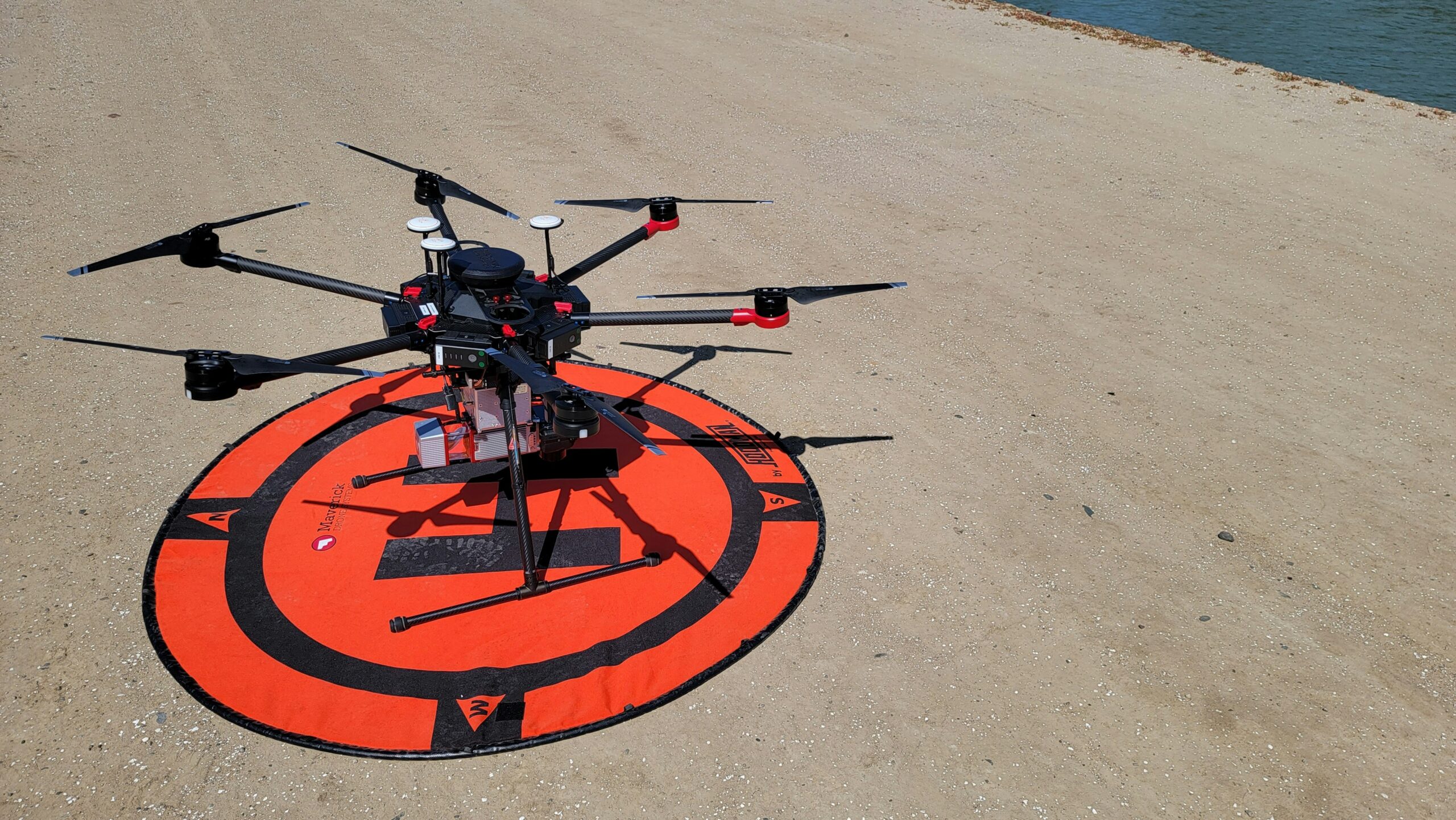
The world of aerial surveying has undergone a massive transformation as drone technology moves from simple photography into the realm of high-precision geospatial data collection.
We no longer live in an era where surveyors must spend weeks on the ground with manual equipment to map out a complex construction site or a vast agricultural field.
Modern unmanned aerial vehicles, or drones, now carry sophisticated sensors that can capture millions of data points in a single flight with centimeter-level accuracy.
These advanced machines allow project managers to generate three-dimensional models and topographic maps faster than ever before, significantly reducing operational costs and human error.
By integrating Artificial Intelligence and Real-Time Kinematics, these drones provide a level of detail that traditional satellite imagery simply cannot match. This technological shift empowers industries like mining, urban planning, and environmental conservation to make data-driven decisions with absolute confidence.
Understanding how to choose and deploy these next-generation tools is essential for any professional looking to stay competitive in the digital age. This guide explores the most effective drone technologies currently redefining the boundaries of precision mapping and aerial intelligence.
Mastering High Precision Positioning with RTK Drones

A. Implementing Real Time Kinematics for Accuracy
Real-Time Kinematics, or RTK, represents the gold standard for positioning in the modern mapping world. Traditional drones rely on standard GPS, which can have an error margin of several meters, making them unsuitable for professional surveying.
An RTK-enabled drone communicates constantly with a ground-based station to correct satellite signal errors in real-time.
This process allows the drone to tag every captured image with precise geographic coordinates down to the centimeter. You can produce highly accurate maps without the need for extensive ground control points, which saves a massive amount of time in the field.
From my perspective, many beginners try to save money by using software to fix “loose” GPS data after the flight, but this often leads to inconsistencies. You solve the problem of data reliability by investing in hardware that gets the coordinates right the moment the shutter clicks.
I suggest you always use a dedicated base station rather than relying on network RTK via a cell signal. This ensures that you maintain a stable connection even in remote areas where mobile data might fail during your mission.
B. Utilizing Post Processed Kinematics for Remote Sites
Post-Processed Kinematics, or PPK, offers a powerful alternative for mapping in areas with poor telemetry or unstable radio links. Instead of correcting the position during the flight, the drone and the base station record raw satellite data separately.
You then merge these data sets during the processing phase back at the office to achieve the same centimeter-level precision as RTK.
This method is particularly useful for long-range missions or deep forest surveys where the connection between the drone and the controller might break. It provides a “safety net” for your data, ensuring that your flight time is never wasted due to a lost signal.
I believe that PPK is the “secret weapon” for surveyors who work in rugged or mountainous terrain where line-of-sight is a constant challenge. You solve the problem of signal interference by moving the heavy computation to your workstation instead of relying on the drone’s onboard processor.
My advice is to always record PPK data as a backup even if you are flying an RTK mission. This redundancy protects your investment and ensures you don’t have to fly the same site twice because of a minor technical glitch.
C. The Role of Global Navigation Satellite Systems
Next-gen drones do not just rely on the American GPS; they use a multi-constellation approach that includes GLONASS, Galileo, and BeiDou. By accessing dozens of satellites simultaneously, the drone can maintain a “lock” even in urban canyons or near high-rise structures.
This diversity of signals improves the speed at which the drone can initialize its high-precision position. It also provides extra stability during hover and automated flight paths, which is critical for capturing clear, overlapping images for photogrammetry.
A drone that can “see” more of the sky is a drone that delivers more reliable results in every environment.
In my view, the number of satellites your drone can track is the most overlooked metric in the entire industry. You solve the problem of “GPS dropouts” by choosing a receiver that can handle multiple frequencies and constellations.
I suggest you check the satellite forecast before you head out to ensure you are flying during a window of peak visibility. This small bit of preparation ensures that your mapping mission stays on schedule and meets the tightest accuracy requirements.
D. Integrating Ground Control Points for Verification
Even with the best RTK technology, professional surveyors still use a few Ground Control Points (GCPs) to verify the final map’s accuracy. These are physical markers on the ground with known coordinates that the drone can see from the air.
By comparing the drone’s data to these fixed points, you can provide a “quality assurance” report to your clients. GCPs act as an anchor that prevents the entire digital model from “drifting” or tilting during the processing phase. They are the final bridge between the virtual model and the physical reality of the earth’s surface.
I think of GCPs as the “truth” that keeps the digital world honest and grounded in reality. You solve the problem of “blind trust” in your sensors by having a manual way to double-check the results.
My take is that you should place at least three GCPs at the corners of your site to act as a permanent reference frame. This professional habit builds immense trust with your clients and protects your reputation as a high-precision mapping expert.
Advanced Sensors for Specialized Data Collection
A. Photogrammetry and High Resolution RGB Sensors
Photogrammetry is the most common mapping technique, where thousands of high-resolution photos are stitched together to create a 2D orthomosaic or a 3D model. Modern drones carry large sensors with mechanical shutters that prevent “rolling shutter distortion” during high-speed flight.
These cameras capture every detail of the terrain, from the texture of the soil to the structural integrity of a bridge.
The resulting maps are not just beautiful to look at; they are measurable assets that engineers use to calculate volumes and distances. High-quality RGB sensors are the backbone of the construction and real estate mapping sectors.
From my perspective, many users over-complicate their gear when a high-quality 45-megapixel camera is actually all they need for ninety percent of jobs. You solve the problem of “data bloat” by choosing a sensor that balances resolution with processing speed.
I suggest you focus on mastering your flight overlap settings to ensure the software has enough “common points” to stitch correctly. Getting the overlap right is more important for a clean map than having the most expensive camera on the market.
B. Lidar Sensors for Penetrating Vegetation
Light Detection and Ranging, or Lidar, uses rapid laser pulses to measure the distance between the drone and the ground. Unlike cameras, Lidar can see “through” the gaps in tree leaves to map the actual ground surface underneath a forest canopy.
This makes it an essential tool for archaeological surveys, forestry management, and flood risk analysis. Lidar also generates “point clouds” that are much denser and more accurate for vertical structures like power lines or telecommunications towers.
While Lidar sensors are more expensive than cameras, they provide data that is simply impossible to get with any other technology.
I believe that Lidar is the “superpower” of the mapping world because it removes the limitations of visible light. You solve the problem of “hidden terrain” by using active sensors that don’t care about shadows or thick brush.
My advice is to only invest in Lidar if you frequently work in overgrown areas or need to map thin structures like wires. For standard construction sites, the extra cost might not be justified when photogrammetry provides a similar result for much less money.
C. Multispectral Sensors for Precision Agriculture
Multispectral cameras capture specific wavelengths of light, such as “near-infrared,” that are invisible to the human eye but reflect the health of plants. Farmers use this data to create “NDVI” maps that highlight areas of a field that are stressed by pests, thirst, or disease.
This allows for “variable rate application” where chemicals and water are only used exactly where they are needed. Precision agriculture drones help save money on inputs while increasing the overall crop yield for the season. It is a vital tool for sustainable farming and food security in an increasingly crowded world.
In my view, multispectral data is like an “X-ray” for your crops that shows problems days before they are visible to the naked eye. You solve the problem of “crop loss” by being proactive rather than reactive in your field management.
I suggest you fly your multispectral missions at the same time every week to build a “growth timeline” for your plants. This historical data is incredibly valuable for predicting your final harvest and identifying long-term soil issues.
D. Thermal Imaging for Infrastructure Inspection
Thermal sensors detect heat signatures, allowing drones to find “hot spots” in solar panels, leaks in steam pipes, or missing insulation in buildings. When used for mapping, thermal data can create a “heat map” of a large industrial facility to identify energy waste or structural risks.
These sensors are also vital for search and rescue missions where they can find a person in the dark or through thick smoke.
Modern “dual-sensor” drones carry both a thermal and an RGB camera, allowing you to see the heat data overlaid on a clear visual image. This provides the context needed to understand exactly what a thermal anomaly represents in the real world.
I think that thermal mapping is the most under-utilized tool in the building maintenance and energy sectors. You solve the problem of “unseen energy leaks” by providing a visual proof of where a building is losing money.
My take is that you should offer “energy audits” as a high-value service to commercial property owners during the winter months. One flight can identify thousands of dollars in savings, making your drone service an easy “yes” for any business owner.
Strategic Flight Planning and Data Processing
A. Automated Mission Planning Software
Mapping drones are rarely flown manually; instead, they follow a pre-determined “grid” or “double-grid” path controlled by software. You define the area you want to map on a digital screen, and the software calculates the optimal flight altitude, speed, and photo intervals.
This automation ensures that the drone captures the perfect amount of overlap for the processing software to work its magic. It also allows you to “repeat” the exact same flight weeks or months later to track the progress of a construction site. Automated flight is the key to consistency and safety in every professional mapping project.
From my perspective, the flight planning phase is where the “intellectual work” of mapping truly happens. You solve the problem of “missing data” by being meticulous with your flight parameters before the drone ever leaves the ground.
I suggest you always include a “buffer zone” around your target area to ensure the edges of your map are just as sharp as the center. A well-planned mission is a quiet and boring mission, which is exactly what a professional wants.
B. Cloud Based vs Desktop Processing
Once you have your thousands of images, you must process them into a final product using specialized photogrammetry software. Cloud-based platforms allow you to upload the data and let powerful remote servers handle the “heavy lifting” while you work on other tasks.
Desktop-based software gives you more control over the fine details and doesn’t require a fast internet connection to work.
The choice often depends on the size of your projects and how much control you want over the final “point cloud” or “mesh.” Both options are incredibly powerful and continue to get faster with every software update.
I believe that the “cloud” is the best option for agencies that need to share results with clients in real-time. You solve the problem of “hardware limitations” by using the infinite power of a remote server farm to process your maps.
My advice is to use desktop software for your most sensitive or complex jobs where “offline” security and manual tweaking are required. Having a foot in both worlds gives you the flexibility to handle any project that comes your way.
C. Generating Accurate Digital Twin Models
A “Digital Twin” is a highly detailed 3D replica of a physical asset, such as a building, a mine, or an entire city block. Engineers use these models to run simulations, plan renovations, or measure the “volume” of a stockpile without stepping foot on it.
Digital twins allow for “virtual site visits” where stakeholders can explore the project from their office in another city.
The accuracy of these models is so high that they can be used as a “legal record” of the site conditions at a specific point in time. This creates a permanent digital archive that adds immense value to any long-term infrastructure project.
In my experience, the digital twin is the “ultimate deliverable” that truly impresses a client and wins repeat business. You solve the problem of “miscommunication” between the office and the field by providing a single source of truth that everyone can see.
I suggest you offer “progress timelines” where the client can scroll through different versions of the digital twin over several months. This visual story of growth is a powerful marketing tool for your agency and a vital management tool for the client.
D. The Importance of Data Management and Storage
Precision mapping generates massive amounts of data, often hundreds of gigabytes for a single large project. You must have a robust system for naming, storing, and backing up these files to ensure they remain accessible for years.
Professional mappers use high-speed solid-state drives and cloud backups to protect their assets from hardware failure. You should also be careful about “data security,” especially when mapping sensitive infrastructure or private property.
Having a clear and organized data “library” allows you to find old projects quickly and provides a level of professionalism that clients expect.
I think that “data rot” is a silent killer for many new drone businesses that don’t take storage seriously. You solve the problem of “lost work” by implementing a “3-2-1” backup strategy—three copies, two types of media, one offsite.
My take is that you should treat your hard drives like a physical safe that holds the most valuable parts of your business. An organized archive allows you to upsell old clients on “comparative analysis” years after the original flight was finished.
Conclusion

Next-gen mapping drones are transforming how we understand and manage the world around us. These tools offer a level of precision that was previously impossible. You should view your drone as a high-end data collection instrument rather than just a flying camera. This mindset shift is the key to professional success.
Always prioritize safety and follow your local aviation regulations during every single flight. A single mistake can put your entire career and reputation at risk. The technology moves fast but the fundamental principles of surveying and photogrammetry remain the same. Master the basics before you move on to the complex sensors.
Building a successful mapping agency takes time, discipline, and a commitment to quality data. Your clients pay for accuracy, not just for cool aerial photos. Start with a solid RTK drone and learn the software inside and out before expanding. Your expertise is what truly adds value to the technology.
The future of mapping is autonomous, digital, and incredibly detailed. Take the first step today and start building your own aerial intelligence empire.